Zirconium Crowns
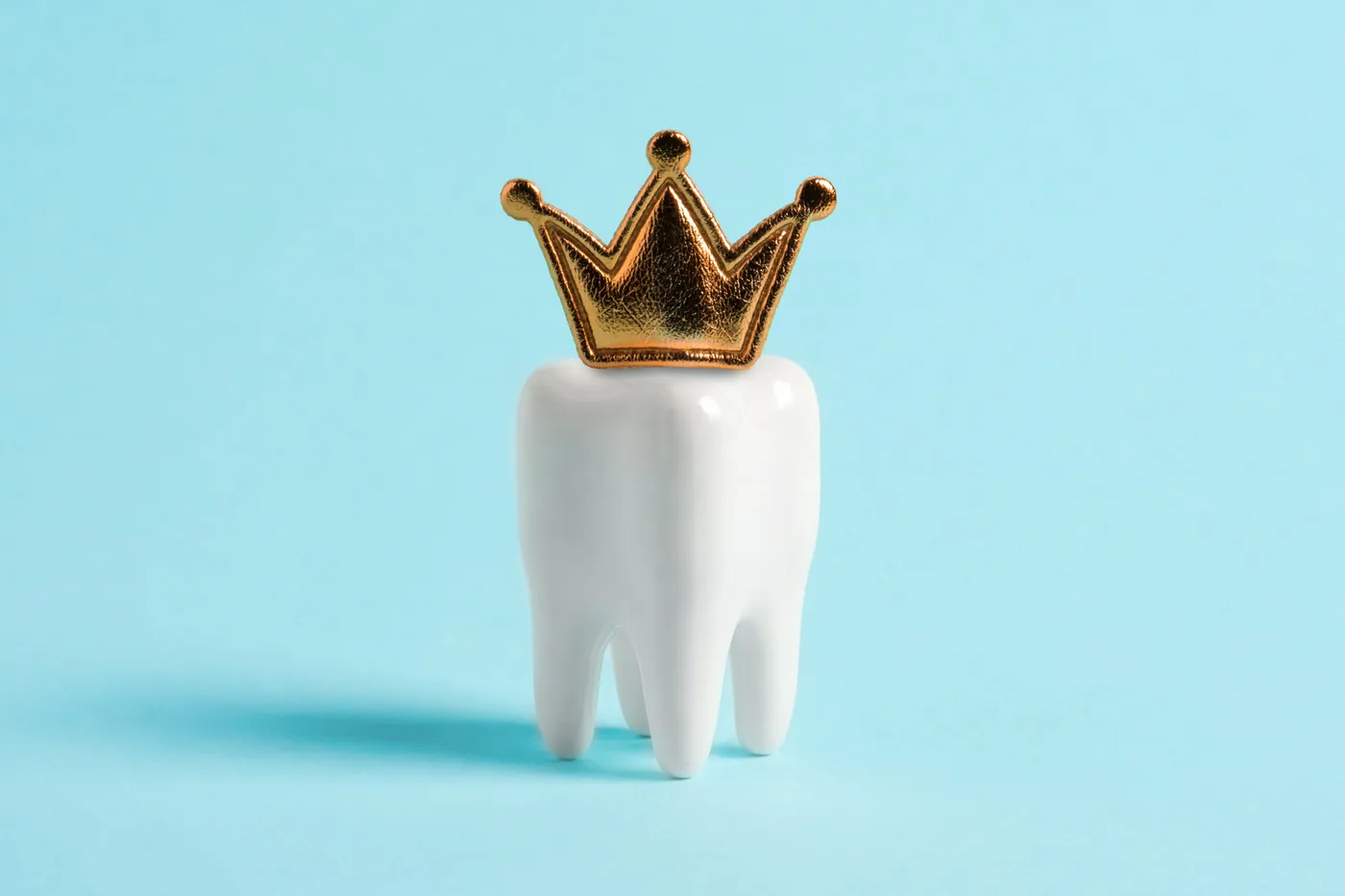
A zirconium crown is a metal-free restoration that covers a damaged, discoloured, or heavily filled tooth, restoring its shape, strength, and appearance. The crown is built on a core of zirconium dioxide — a ceramic material valued in dentistry for combining high fracture resistance with the ability to transmit light in a way that resembles natural enamel. At Gunaydin Dental Clinic, zirconium crowns are produced from digital scans so the fit at the gum margin is precise, which is what determines both the aesthetic result and the long-term health of the tooth underneath.
The clearest difference from a traditional metal-supported porcelain crown is visible at the gumline. A metal-based crown has an opaque substructure that blocks light, and as gums naturally recede slightly over the years a thin dark line often becomes visible at the edge. Zirconium has no metal core, so no grey shadow develops and light passes through the crown much as it does through a natural tooth. This matters most on front teeth, where the difference between a crown that looks real and one that looks like dental work is largely a question of how it handles light.
Zirconium is also highly biocompatible. It does not corrode, it is well tolerated by gum tissue, and it is an appropriate choice for patients with sensitivity to metal alloys. Its strength makes it suitable not only for single crowns on visible front teeth but also for molars, where chewing forces are highest, and for multi-unit bridges that replace missing teeth. The material can be produced in different formulations, with more translucent versions favoured for front teeth and higher-strength versions used where load matters more than translucency.
Treatment is usually completed in two appointments. At the first, the tooth is prepared under local anaesthetic by removing a thin, measured layer of tooth structure to make room for the crown, and a digital scan or impression is taken. A temporary crown protects the tooth in the meantime. At the second appointment the finished crown is tried in, checked for fit, bite, and shade, and then bonded permanently. Where the underlying tooth has an infected nerve, a root canal treatment is completed first, since a crown placed over an untreated infection will fail.
With good oral hygiene, zirconium crowns typically last well over a decade. The crown itself does not decay, but the natural tooth beneath it and the gum around it can, and almost every crown that fails does so because of decay at the margin rather than a problem with the ceramic. Daily brushing, cleaning between the teeth, and regular check-ups are therefore what determine longevity. Zirconium does not stain the way natural enamel does, which is an advantage — but it also means the crown will not lighten if you later whiten your natural teeth, so shade is normally chosen after any planned whitening rather than before.
Zirconium crowns are not the right answer in every case. A tooth with only moderate damage is often better served by a conservative filling or a veneer that removes far less tooth structure, and preparing a healthy tooth for a crown is an irreversible step. A crown is indicated when a tooth is substantially broken down, root-treated, or already carrying a large restoration. Our dentists assess which approach preserves the most natural tooth in your case as part of our cosmetic dentistry treatments — contact our clinic in Fatih, Istanbul to arrange an examination.