
Dentures
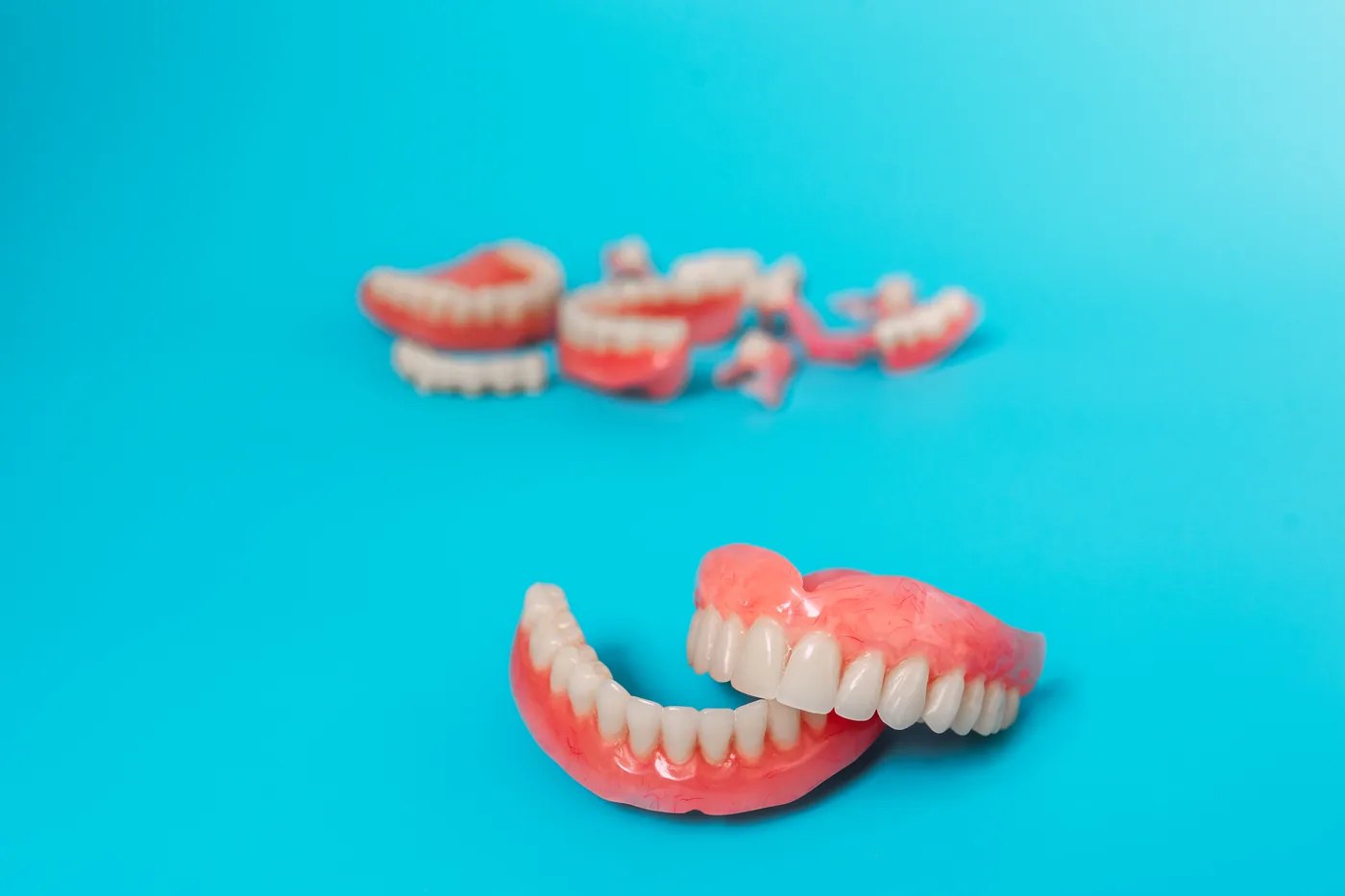
Dentures are removable appliances that replace missing teeth and the surrounding tissue, restoring the ability to chew and speak comfortably while supporting the natural shape of the face. When several or all natural teeth have been lost, the remaining jawbone gradually changes and the facial profile can begin to collapse inward. A well-made denture restores both function and appearance. At Gunaydin Dental Clinic, every denture is planned and produced individually after a detailed examination of the jaw, gums, and any remaining teeth.
There are two main types. A complete denture replaces an entire upper or lower arch and rests directly on the gum tissue. A partial denture is used when some healthy natural teeth remain; it fills the gaps and is held in place by clasps or precision attachments that anchor to those teeth. Partial dentures have a second benefit that is often overlooked: they stop the remaining teeth from drifting into the empty spaces, which protects the bite over time.
Making a denture is a staged process rather than a single appointment. It begins with impressions of the jaw, followed by a series of fittings in which the height, bite, and tooth position are checked and refined. A try-in stage lets you see the shape and shade before the denture is finished, so adjustments can still be made. The complete process usually takes several appointments spread over a few weeks, and the time is spent deliberately — accuracy at the fitting stage is what determines whether the finished denture is comfortable.
The first weeks with a new denture involve a genuine adaptation period, and knowing this in advance makes it easier. Speech can feel different at first, eating is best relearned with soft foods cut into small pieces, and increased saliva flow is common in the early days. Small sore spots where the denture presses on the gum are normal and are resolved quickly with a minor adjustment — these should be corrected by your dentist rather than filed down at home, as reshaping a denture yourself almost always makes the fit worse.
Daily care keeps a denture functional and hygienic. Dentures should be cleaned over a basin of water or a folded towel so they are not damaged if dropped, brushed with a soft brush and a non-abrasive cleaner rather than regular toothpaste, and rinsed after meals. Hot water must be avoided because it can distort the acrylic permanently. Gums also need care: leaving the denture out overnight where possible allows the tissue to recover. Denture adhesive can improve confidence, but it is intended to supplement a well-fitting denture — a denture that only stays in place with adhesive needs to be assessed rather than glued more firmly.
Dentures are not permanent appliances. The jawbone continues to change shape after teeth are lost, so a denture that fit well initially will gradually loosen, and periodic relining or replacement is expected rather than a sign of failure. Regular check-ups let this be managed before it affects comfort. Where the jawbone is suitable, an implant-supported denture offers markedly better stability by anchoring the appliance to implants instead of resting on the gum, and for individual missing teeth a fixed crown or bridge may be the better option. Which approach suits you depends on bone volume, gum health, and your own priorities — contact our clinic in Fatih, Istanbul to discuss the options.