Dental Veneers: Types, Process, Longevity and Who They Suit
What dental veneers are, how porcelain and composite veneers differ, how the treatment works, how long veneers last, and when a veneer is the wrong choice.
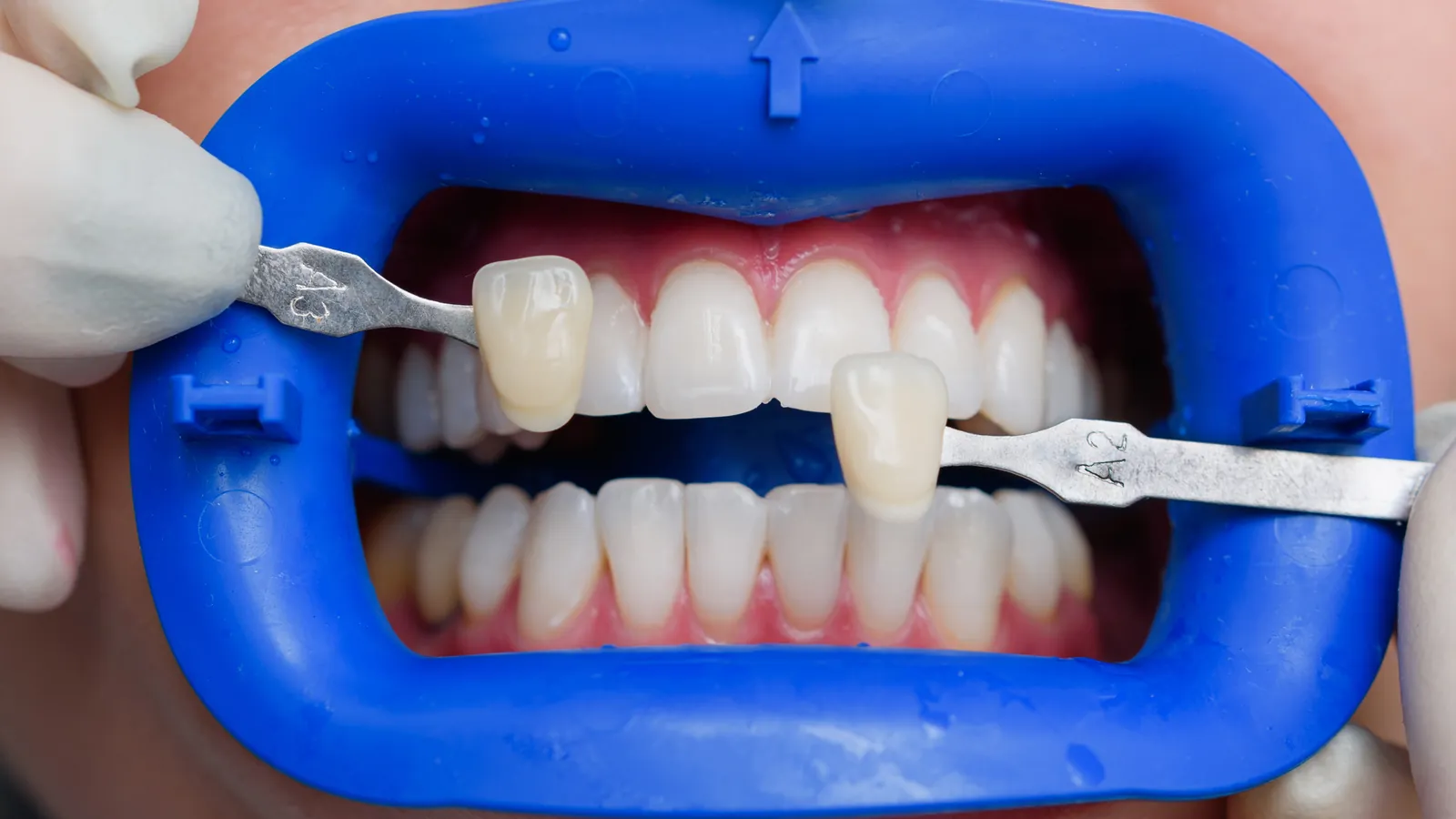
A dental veneer is one of the most conservative ways to change how a tooth looks, and also one of the most misunderstood. The word gets applied loosely to everything from a small composite repair on a chipped front tooth to a full set of crowns fitted abroad in a week. These are very different procedures with very different consequences for the tooth underneath.
This guide explains what a veneer actually is, how porcelain and composite compare, how the treatment runs from consultation to bonding, how long veneers realistically last, and — just as importantly — when a veneer is the wrong answer.
What Are Dental Veneers?
A veneer is a thin, custom-made shell bonded permanently to the front surface of a tooth. It changes the colour, shape, length, or apparent position of that tooth without encasing it entirely.
That last distinction matters more than any other point in this article. A veneer covers the visible face of the tooth. A crown covers the whole thing. Because a veneer only needs to sit on one surface, it requires removing far less natural tooth structure — usually somewhere in the region of a few tenths of a millimetre of enamel, roughly the thickness of the veneer that will replace it.
Veneers are typically used on the teeth that show when you smile, most often the upper front six or eight. They are a cosmetic treatment rather than a restorative one: they are designed to improve appearance, not to rebuild a tooth that has lost significant structure.
Types of Veneers
Porcelain Veneers
Porcelain veneers are made in a dental laboratory from an impression or digital scan of the prepared teeth, then bonded in place at a later appointment. Porcelain is the material of choice for most cases for two reasons: it handles light in a way that closely resembles natural enamel, giving depth rather than a flat painted look, and its glazed surface resists staining from coffee, tea, and red wine almost indefinitely.
The trade-offs are cost and time. Porcelain veneers require at least two appointments and a laboratory stage in between, during which temporary veneers protect the prepared teeth.
Composite Veneers
Composite veneers are built from tooth-coloured resin applied and shaped directly onto the tooth by the dentist, usually in a single appointment. They cost considerably less than porcelain and often need little or no enamel removal, which makes them a far more reversible option.
The limitations are real, though. Composite is softer than porcelain, so it wears more quickly at the biting edges, and it is porous enough to absorb stain over time — the same coffee habit that leaves porcelain untouched will gradually dull composite. A composite veneer can be polished and repaired chairside, which porcelain generally cannot, but it will need replacing sooner.
Minimal-Prep and No-Prep Veneers
Some very thin porcelain veneers can be bonded with little or no enamel removal. These are appealing because they preserve tooth structure and are, in principle, reversible. However, they only work in a narrow set of cases — typically teeth that are already slightly small or set back. Applied to a tooth of normal size, a no-prep veneer adds bulk and can look thick or protrusive. Any clinic offering no-prep veneers as a default for every patient is overselling the technique.
Veneers vs Crowns: The Difference That Matters
This is the single most consequential decision in cosmetic dentistry, and it is often glossed over.
| Veneer | Crown | |
|---|---|---|
| Coverage | Front surface only | Entire tooth |
| Tooth structure removed | Minimal | Substantial |
| Best for | Sound teeth that look wrong | Weak, broken, or root-treated teeth |
| Reversibility | Limited but far higher | None |
A veneer is indicated when the tooth is fundamentally healthy and the problem is appearance. A crown is indicated when the tooth is structurally compromised — heavily filled, badly broken, cracked, or root-treated — and needs to be held together rather than merely covered. Where a crown genuinely is the right treatment, a metal-free zirconium crown avoids the dark line at the gum that older metal-backed crowns develop over time.
Fitting crowns where veneers would have worked is not a stylistic preference. It permanently removes healthy tooth structure that cannot be replaced, and it commits the patient to a lifetime of replacing those crowns as they eventually wear out.
Who Are Veneers Suitable For?
Veneers work well for:
- Discolouration that whitening cannot correct — particularly intrinsic staining from tetracycline use or fluorosis, which sits within the tooth rather than on its surface
- Chipped or worn edges on otherwise healthy front teeth
- Small gaps between teeth, where closing the space orthodontically would be disproportionate
- Mildly rotated or uneven teeth, where a veneer can create the appearance of alignment
- Teeth that are slightly small or misshapen relative to their neighbours
When Veneers Are Not the Right Choice
An honest assessment of when to decline is as valuable as knowing when to proceed. Veneers should be delayed or avoided when:
- Active gum disease or untreated decay is present. Bonding a veneer over an unresolved problem seals it in. Gum and tooth health must be established first — always.
- Crowding is significant. Masking substantially misaligned teeth with veneers means preparing them heavily to fake a straight line. Orthodontic treatment first, veneers afterwards if still wanted, removes far less tooth.
- There is heavy grinding or clenching. Bruxism fractures porcelain. It does not rule veneers out, but it does mean a night guard is part of the plan rather than an optional extra.
- Too little enamel remains. Veneers bond reliably to enamel and poorly to dentine. A tooth already worn or heavily restored may not offer a sound bonding surface.
- Expectations do not match what the case allows. A mock-up beforehand is the honest way to establish this, and it is much easier to change a mock-up than a bonded veneer.
How the Treatment Works
Consultation and design. The teeth and gums are examined, existing problems identified, and the desired result discussed. Photographs and a digital or wax mock-up let you see the proposed shape and proportion before anything is touched. This stage is where most of the outcome is actually decided.
Preparation. Under local anaesthetic, a thin layer of enamel is removed to make room for the veneer. An impression or digital scan is taken and sent to the laboratory, and temporary veneers are fitted to protect the teeth in the interim.
Bonding. At the final visit the temporaries are removed and the veneers are tried in to check fit, shade, and how they sit against the lip and gum before anything is fixed. Once approved, each veneer is bonded with a resin cement cured under a specialised light, and the bite is checked and adjusted.
Porcelain veneers typically take two to three appointments across a few weeks. Composite veneers can often be completed in one.
How Long Do Veneers Last?
Porcelain veneers commonly last ten to fifteen years, and frequently longer. Composite veneers generally last five to seven.
Those figures depend far less on the material than on what happens afterwards. The most common reasons veneers fail are not manufacturing faults but grinding, using front teeth to bite nails, pens, or packaging, and — most often of all — decay developing at the margin where the veneer meets the tooth. The veneer itself cannot decay. The tooth behind it very much can, which is why daily cleaning between teeth and regular check-ups determine longevity more than the choice of material.
Caring for Veneers
Veneers need no exotic routine, just consistency:
- Brush twice daily with a non-abrasive toothpaste; heavily abrasive whitening pastes dull the glaze on porcelain and scratch composite
- Clean between the teeth every day — the margin is where problems begin
- Wear a night guard if you grind or clench
- Do not bite hard objects with veneered front teeth
- Keep regular check-ups so any margin breakdown is caught early
A Note on "Turkey Teeth"
Anyone researching veneers in Turkey will encounter the phrase, so it is worth addressing directly rather than pretending it does not exist.
The term generally refers not to veneers at all, but to cases where healthy front teeth have been aggressively reduced to small pegs and fitted with full crowns — often a complete set, often within a few days. The visible result can look striking initially. The underlying problem is that a large volume of irreplaceable tooth structure has been removed, sometimes taking the nerve close enough to necessitate root canal treatment later.
That outcome is a consequence of over-treatment, not of geography. The safeguards are the same anywhere in the world: an examination before any treatment is agreed, a written plan explaining exactly how much tooth will be removed and why, a clear answer as to whether you are being offered veneers or crowns, and a timeline that allows for proper planning rather than compressing everything into a holiday. A clinic that resists any of those questions is telling you something useful.
Frequently Asked Questions
Can a single veneer be matched to my other teeth?
Yes, and single-tooth veneers are routine. Matching one veneer to adjacent natural teeth is technically more demanding than making a matched set, because the colour, translucency, and surface texture all have to blend with what is already there. It is very achievable, but it is worth allowing time for shade selection.
What happens if a veneer chips or comes off?
A debonded porcelain veneer can often be re-bonded if it is intact and undamaged, so keep the piece and contact your dentist. Chipped porcelain usually cannot be repaired reliably and typically means replacing that veneer. Composite, by contrast, can generally be repaired and repolished directly.
Will my gums react to veneers?
Healthy gums tolerate well-fitted veneers without difficulty. Irritation is nearly always caused by a margin that is rough, overhanging, or extends too far beneath the gumline — which is a fit issue rather than a material one, and a reason the preparation and laboratory stages deserve care.
Do veneers need replacing eventually?
Yes. Veneers are long-lasting but not permanent, and planning on the basis that they will eventually need renewal is realistic rather than pessimistic. Good hygiene and a night guard where indicated push that horizon considerably further out.
In Short
Veneers are an effective and comparatively conservative way to improve the appearance of teeth that are healthy but not shaped or coloured the way you would like. The material matters less than two things: whether a veneer is genuinely the right treatment for your teeth rather than a crown, and how carefully the case is planned before any enamel is touched.
If you would like to know whether veneers suit your teeth, our dentists at Gunaydin Dental Clinic in Fatih, Istanbul will assess your gum and tooth health, explain what each option would involve, and show you a mock-up of the result before any treatment begins. You can read more about our cosmetic dentistry treatments, or get in touch to arrange an examination.