
Dental Bone Grafting: Why It's Needed, What It Involves and How Long It Takes
Why a dental bone graft is needed before implants, the graft materials used, what a sinus lift is, healing timelines, and what recovery really looks like.
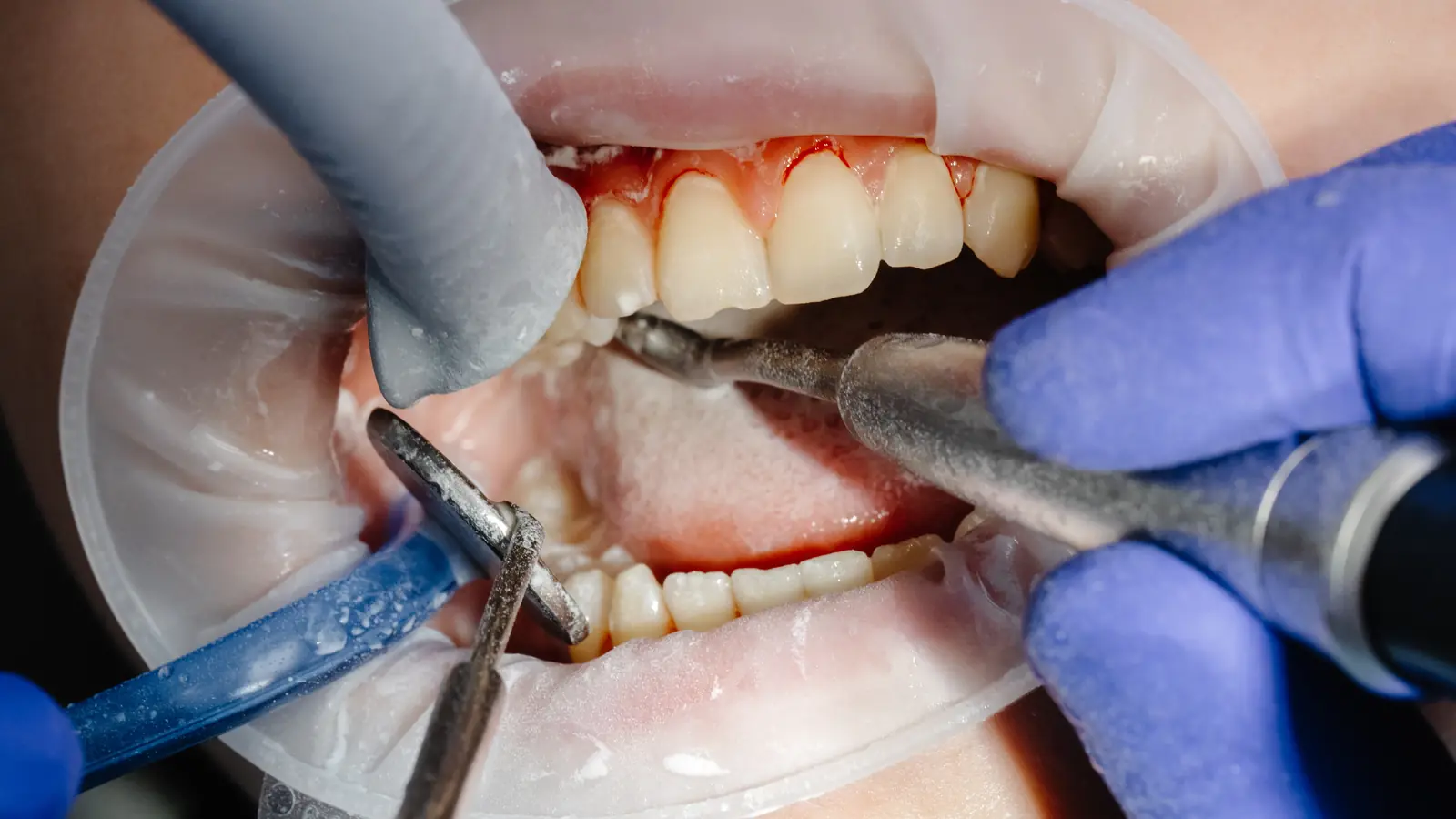
For anyone told they need a bone graft before a dental implant, the news usually arrives as an unwelcome surprise — an extra procedure, extra months, and extra cost that was not part of the plan. It is worth understanding why it gets recommended, because the reasoning is straightforward and the alternative is usually worse.
An implant is not glued into the gum. It is a titanium post anchored in bone, and it relies entirely on that bone gripping it firmly enough to withstand years of chewing force. If there is not enough bone, the implant either cannot be placed or will not last. A graft is what makes the difference between those two outcomes.
This guide covers why jawbone is lost, when a graft is genuinely necessary, what the materials actually are, how long healing takes, and what recovery realistically feels like.
What Is a Dental Bone Graft?
A bone graft rebuilds jawbone that has been lost, creating enough volume and density to support an implant.
The graft material is placed into the deficient area, where it acts as a scaffold. Over the following months your own bone cells migrate into that scaffold, lay down new bone, and gradually replace the graft material. The end result is not a block of foreign material holding an implant — it is your own bone, restored to a volume that can do the job.
That distinction matters for understanding the timeline. The waiting period after a graft is not arbitrary caution; it is the time your body needs to convert a scaffold into load-bearing bone.
Why Jawbone Is Lost in the First Place
Jawbone is maintained by use. The forces transmitted through a tooth root every time you chew signal the surrounding bone to keep renewing itself. Remove the tooth and that signal stops.
The consequence is quicker than most people expect. The most significant loss occurs in the first six to twelve months after an extraction, and the ridge continues to narrow slowly for years afterwards. A tooth removed a decade ago has typically left a site substantially different from the one that existed at the time.
Other causes compound it:
- Gum disease, which destroys the bone supporting the teeth long before they become loose
- Infection or an untreated abscess, which erodes bone around the root
- Trauma to the jaw
- Long-term denture wear, because a denture rests on the gum and does not transmit force into the bone the way a root does
- Sinus expansion in the upper back jaw once molars are missing
When Is Bone Grafting Needed?
Not everyone missing a tooth needs a graft. It is indicated when imaging shows the bone is too narrow, too short, or too soft to hold an implant securely. Common situations include:
- A tooth lost years ago, where the ridge has resorbed
- An upper back tooth site where the sinus has dropped down
- Bone destroyed by advanced periodontal disease
- A socket where the surrounding bone walls were damaged during extraction
- A long-term denture wearer moving to implants
There is also a preventive version. Socket preservation places a small graft into the socket at the moment a tooth is extracted, before resorption begins. It adds a modest step at extraction and frequently removes the need for a much larger graft later — which is why it is often recommended when an implant is anticipated but not immediate.
Types of Bone Graft Material
Four categories are used, and all serve the same scaffolding function.
Autograft — your own bone, harvested from elsewhere in the jaw or, for larger reconstructions, from the hip. It carries your own living bone cells, which makes it highly effective, but it requires a second surgical site and therefore more recovery.
Allograft — human donor bone, processed and sterilised through tightly regulated tissue banking. It avoids a second surgical site and is one of the most widely used options.
Xenograft — treated animal bone, most commonly bovine. Processing removes all organic material, leaving only the mineral structure. It resorbs slowly, which is useful where long-term volume stability matters.
Alloplast — entirely synthetic materials such as calcium phosphate ceramics. No donor source is involved, and the resorption rate can be selected to suit the case.
A membrane is frequently placed over the graft as well. Gum tissue heals considerably faster than bone, and without a barrier it would fill the space before the bone could. The membrane holds that space open — a technique known as guided bone regeneration.
Sinus Lift: A Specific Case
The upper back jaw presents a particular problem. The maxillary sinus, an air-filled cavity, sits directly above the roots of the upper molars. When those teeth are lost, the sinus tends to enlarge downwards into the vacated space, and the remaining bone height between the sinus floor and the ridge can become too thin for an implant.
A sinus lift addresses this by carefully raising the sinus membrane and placing graft material into the space created beneath it, increasing the available bone height. It is a well-established procedure, but it heals more slowly than a simple ridge graft — typically six to nine months before implants are placed.
What the Procedure Involves
Most bone grafts are outpatient procedures performed under local anaesthetic, with sedation available where preferred.
The dentist opens the gum to expose the deficient bone, prepares the site, places the graft material and, where indicated, a membrane over it, then closes the gum with sutures. A straightforward graft takes roughly 45 to 90 minutes. Larger reconstructions or those requiring bone harvested from elsewhere take longer.
In some cases the graft and the implant are placed in the same appointment. This is possible when enough native bone remains to hold the implant stable while the graft matures around it, and it removes several months from the overall timeline. Whether it is appropriate is determined by imaging, not by preference.
Healing and Timeline
Two different healing processes run on different clocks, and conflating them causes most of the confusion.
Soft tissue — the gum closes within one to two weeks, and sutures are typically removed at that point. This is when you start feeling normal.
Bone — maturation takes considerably longer. Typical waiting periods before an implant can be placed:
| Graft type | Typical wait before implant |
|---|---|
| Socket preservation | 3–4 months |
| Ridge augmentation | 4–6 months |
| Sinus lift | 6–9 months |
| Large reconstruction | 9+ months |
Your dentist confirms readiness with a scan rather than by date alone. Placing an implant into a graft that has not fully matured risks losing both.
Recovery: What to Expect
First 48 hours. Swelling and soreness build and usually peak around day two or three. Cold compresses applied externally help. Prescribed pain relief manages the discomfort in the large majority of cases.
First week. Stick to soft, cool foods and chew on the opposite side. Avoid rinsing vigorously, using a straw, or anything that creates suction in the mouth, as this can disturb the graft. After a sinus lift you will also be asked not to blow your nose, and to sneeze with your mouth open.
Weeks two to four. Normal eating resumes gradually. The site feels increasingly unremarkable, though the bone underneath is still consolidating.
Beyond. Bone maturation continues silently for months. The absence of symptoms does not mean the graft is finished, which is why the follow-up scan matters.
Smoking deserves a paragraph of its own. A graft integrates only if it receives a good blood supply, and smoking constricts exactly the vessels it depends on. It is the single largest controllable risk factor for graft failure. Stopping, even temporarily around the procedure and the healing period, measurably improves the odds.
Risks and When to Call Your Dentist
Bone grafting is a routine, predictable procedure, but no surgery is risk-free. Contact your dentist if you notice:
- Pain that increases after day three rather than easing
- Swelling that worsens after the first few days
- Discharge, a persistent bad taste, or fever
- Graft material becoming visible through the gum
- After a sinus lift: nosebleeds or fluid from the nose that does not settle
Most complications are manageable when caught early. Grafts that fail are usually repeated successfully after the site has healed.
Can You Avoid Needing a Graft?
Sometimes, and the options are worth discussing before accepting a graft as inevitable:
- Act sooner. An implant placed shortly after extraction often avoids a graft entirely, because the bone has not yet resorbed
- Socket preservation at extraction, which prevents the loss rather than repairing it
- Shorter or narrower implants, which suit some sites with limited bone
- Angled placement, positioning implants to use the bone that remains
- A different treatment altogether — where bone is very limited or surgery is unwanted, an implant-supported or conventional denture restores function without the same bone requirements
If you are missing a tooth and considering implant treatment at some point, the most useful thing you can do is have the site assessed sooner rather than later. Bone that still exists is far easier to keep than to rebuild.
Frequently Asked Questions
Is bone from a donor safe?
Donor bone used in dentistry is processed through regulated tissue banks, sterilised, and stripped of all cellular material, leaving only the mineral scaffold. Disease transmission risk is regarded as extremely low. Patients who would still prefer to avoid donor material can discuss synthetic alternatives, which perform well in most routine cases.
Will I be without a tooth during healing?
Not necessarily. A temporary partial denture or a bonded temporary tooth can usually fill the gap during healing. What matters is that the temporary does not press directly on the graft site, so the design is chosen with that in mind.
Does a bone graft show on the outside?
No. The graft sits within the jaw and is covered by gum tissue. Swelling in the first days may be visible, but there is no lasting external change — if anything, restoring lost ridge volume supports the surrounding tissue better than a collapsed site does.
How successful are dental bone grafts?
Success rates are high, and the great majority integrate without incident. The main factors influencing the outcome are the size of the defect, general health, whether the patient smokes, and how well post-operative instructions are followed in the first weeks.
In Short
A bone graft is not an upsell tacked onto implant treatment — it is what makes implant treatment possible when bone has been lost, and jawbone starts disappearing the moment a tooth comes out. The timeline is longer than most people would like, but the waiting is doing real work: turning a scaffold into bone strong enough to carry an implant for decades.
If you have been told you need a graft, or you are missing a tooth and want to know what condition the site is in, our dentists at Gunaydin Dental Clinic in Fatih, Istanbul will assess the bone with imaging and explain honestly whether grafting is necessary in your case — or whether a simpler route is available. Get in touch to arrange an examination.